
FEATURE
Hearts start on why latest rule tweak will change goalkeeping.

“The goalkeepers get it, they don’t really change it for anybody else very often, but they keep making it more difficult for us.”
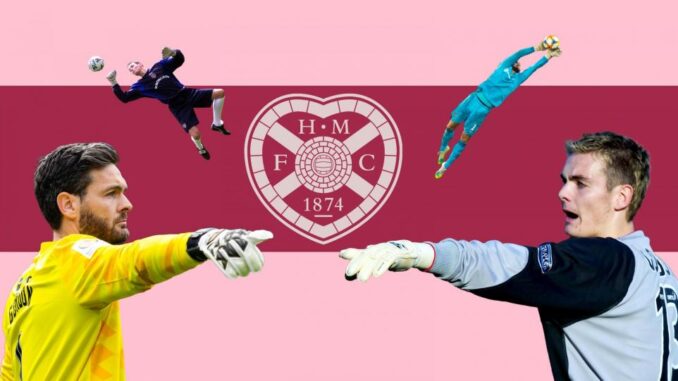
That was Craig Gordon’s response when asked about the variations in his on-field position throughout his long career. Specifically, the eight-second rule will be implemented this coming season. According to a modification to Law 12.2, goalkeepers now have eight seconds to release the ball before the opposition team is granted a corner. The referee will show a visual countdown in the final five seconds.
It is an outgrowth of the six-second rule, which was announced in 1998, enforced for a while, and then mostly forgotten before being amended in 2024. During that period, there were several further changes aimed against shot-stoppers. Keeping a foot on or above the line during penalties, for example, is one of the obviously unsportsmanlike actions that a custodian is no longer permitted to perform during a penalty kick. Even before the 42-year-old began playing, probably the most basic rule modification to the game was aimed at goalkeepers when collecting up pass backs was made illegal. A few years later, the option to return it to the keeper from a shy was added.
Eventually, goalkeepers were viewed as another outfielder when their team had the ball, which is the primary difference in the profession today from when Gordon made his senior debut for Hearts in 2001. “A lot has changed in some ways, in terms of what the goalkeepers are required to do within the game, within the build-up for the team,” he told me. “A number of the rules have changed, and we certainly have another rule change coming up next season. We went through six seconds, then it kind of died down, and now it’ll be eight seconds. “Goal kicks are now allowed to be taken from inside the box. So, there’s all these little tweaks that have changed.
“Managers want goalkeepers to be sweepers, which wasn’t the case when I first started playing, nor was playing out from the back; it just didn’t happen. Even the best teams did not do it. “So, football has evolved dramatically, and much of this is due to the custodian and his role in the squad. I’m proud of my ability to cope and adapt in the midst of challenging circumstances. “…you must have one foot on the line for penalties. All of these tiny changes imply you have to adapt your method and account for the regulations that are constantly changing.
“The goalkeepers get it, they don’t really change it for anybody else very often, but they keep making it more difficult for us.” The cynical Scottish football fan would expect pandemonium with the application of this new rule, conjuring up scenarios in which the custodian cannot see the referee’s countdown or there is disagreement about when the count should begin. Gordon, who will begin his testimonial season with Hearts, believes it will not cause too much of a fuss.
(Image: SNS Group)
“I think eight seconds will change it,” the man stated. “I believe you will very rarely hear it called. When the referee gives the signal to indicate how long you have left, the goalkeepers will release the ball rather than concede the corner. “So, sure, I don’t expect it to be called very often. “I believe goalkeepers will be aware of this.” It is probably unsurprising that a custodian who suffered a double-leg break barely 18 months ago ignores another rule modification. And that rehabilitation was not even the most difficult in his career. After leaving Hearts for Sunderland for £9 million, a club record, he sustained ailments that kept him on the treatment table for two years.
He began his career with Dumbarton, then moved on to Rangers before joining with Celtic and regaining Scotland’s top spot. He attributes his rehabilitation in large part to his time with the Rangers. He was introduced to the club by Jim Stewart, the then-Ibrox keeper coach who had previously worked for Hearts and Scotland. The Glasgow club has previously rehabilitated a similar ailment. “I probably thought for that first year that I wouldn’t play again, until the beginning of the second season when my knee started to feel a little bit better,” Gordon recalled. “When I got to Rangers, I worked with Steven Walker, the physio, and he was fantastic with me.
“He spent some time figuring out how I could rehab my knee without it hurting, giving me exercises that were less painful but still helped build up my leg, and just his thought process about the injury.”
Read more on sportupdates.co.uk
Leave a Reply