
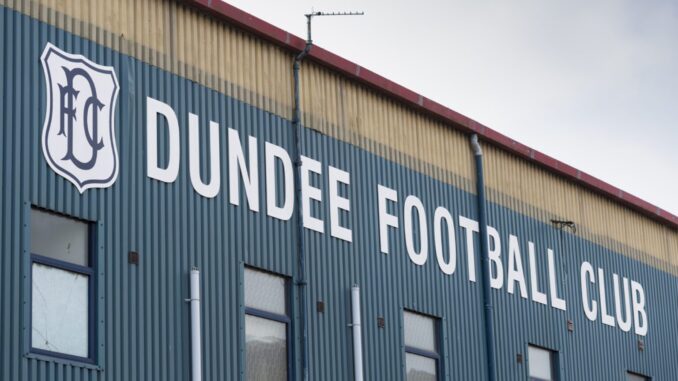
Dundee FC: Inside look at finances of the Dark Blues.
We shall investigate Dundee’s financial health in detail using three metrics.
Dundee FC is the city’s oldest club, however they have had to overcome financial difficulties to remain in existence. The Dark Blues had a remarkable history, with the highs of their European Cup victories in the 1960s preceding the lows of administration in the 2000s. Dee’s debts had risen to £20 million, raising concerns that the company would fail. However, Dundee prevailed thanks to the support of its fans. And they have been owned by Tim Keyes and John Nelms since 2013. Football Partners Scotland LP, controlled by the Keyes family, purchased a 75% share in Dee in 2019 and is critical to the club’s financial stability.
Dundee’s financial situation, like that of every other football team covered by The Courier, is of great interest to their fans. That is why our analytics, football, and business teams collaborated to monitor three critical financial performance indicators at Dens Park.
Has the club recorded a net profit or loss?
Dundee has only made a profit after tax once in the last decade. That was for the fiscal year ending May 2021, when the Dark Blues made a net profit of £74,279 despite the damage the Covid pandemic had on sport around the world. Dundee FC attributed the financial rise to “prudent business decisions” and an insurance plan in case their operations were ever disrupted. Despite returning to the first division, they suffered an after-tax loss the following season. A return to the Championship in the 2022/23 season resulted in the highest annual loss since 2014/15. Another loss came in the fiscal year ending 2024, with the club blaming increased investment, especially in staffing.
What is turnover like?
Turnover indicates how much money comes into the football team. However, Dundee FC has not always made this figure public. The club only files accounts for tiny businesses that require minimal information to be released. Companies may file these shortened accounts provided they meet two of three requirements. Since April 2025, these companies have had a turnover of less than £15 million, a financial sheet of less than £7.5 million, or fewer than 50 workers. Until this year, turnover had to be less than £10.2 million, with a balance sheet total of less than £5.1 million. Despite achieving two of these standards, some clubs, such as St Johnstone, continued to publish their most recent accounts in full.
Others, such as Aberdeen FC, exceed the turnover limit, whereas Dundee United has more over £5.1 million on its bank sheet. Prior to 2019/20, the Dark Blues issued their full financial statements. When The Courier contacted the club about the missing turnover statistics, a spokeswoman stated that all accessible financial information is posted on their website. We were therefore unable to locate numbers on turnover for the fiscal years 2020, 2021, and 2024. The highest documented turnover amount was £4.9 million in 2021/22. The next year, Dundee’s revenue fell by £1.7 million, marking their greatest loss in the previous decade.
At the time, Dundee FC said this result was expected due to “a Premiership budget with a Championship income”.
Wages-to-turnover ratio
The wage-to-turnover ratio for that year reflects Dee’s reasoning above. This indicator is important for assessing financial health because it displays what percentage of revenue is spent on employee expenses. It increased to 108% in the year ending 2023, up from 73% in the year ending 2022. Staff costs fell by £117,447 during the club’s Championship-winning season in 2022/23. However, competing in the lower league resulted in a decline in turnover, and the ratio increased dramatically. The wages-to-turnover ratio likewise increased in the year before to May 2019. In such accounts, turnover declined by more than half a million dollars year over year.
This was worsened by personnel costs rising by approximately the same amount as the club attempted, but failed, to prevent relegation from the Scottish Premiership during the 2018/19 season. As a result, staff expenditures exceeded the amount of money brought into the club. However, the £3.9 million spent on staff that season was not the greatest annual spend according to the data available. According to the most recent reports for 2023/24, staff costs have climbed by more than a million to £4.5 million. Keyes and Nelms formed a separate firm, Dark Blue Property Holdings, to oversee the club’s new stadium at Camperdown Park.
Read more on sportupdates.co.uk
Leave a Reply