
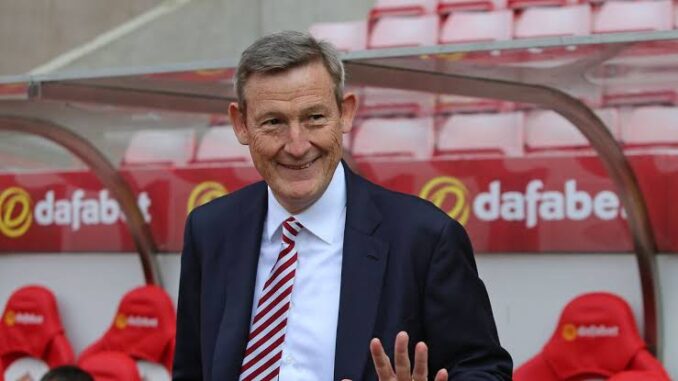
Sunderland’s Owners Rated: Who has been our best and worst?
Lars Knutsen shares his thoughts on all of Sunderland’s owners from his time as a fan—how would you rate each of them out of five?
I have been a Sunderland fan for almost as long as my fellow writer Kelvin Beattie, which is a very long time, and I have seen a number of different owners at our club.
Football has changed dramatically over the last few decades, as has the news media, and while I have no insider Wearside boardroom knowledge, some of our club’s major stakeholders have left an indelible impression on me and many other supporters.
What really irritates most supporters is when an individual or group takes over our beloved football club, does little to improve on-field performance, fan facilities, or the team’s reputation, and then makes money when they eventually sell their shares.
There is undoubtedly a business aspect to running a football team, but I would argue that the club is nothing without its fans, so a league club is more than just a commercial or financial asset.
Ask Bury FC supporters, who have won the FA Cup twice, what it means to be forced to leave the EFL involuntarily, as The Shakers were ejected from League Two in August 2019 and are now in the ninth tier of English football.
Talk to fans of Leicester, Hull City, or Sheffield Wednesday in the league we just left, and they are pessimistic about the upcoming season and realistically concerned about being relegated from the Championship.
The first Sunderland owner I was aware of was transport businessman Tom Cowie, who founded a company that later became Arriva.
I knew his name because he married a Norwegian lady who was a friend of our family, and I had met his mother several times.
Cowie served as Chairman of Sunderland AFC from 1980 to 1986, but according to Wikipedia, “his tenure remains, in the eyes of most supporters, a real low in the club’s history.” His appointment of Lawrie McMenemy as manager in 1985 resulted in relegation to the Football League Third Division.
” We sometimes have the naive expectation that financially successful businesspeople are nice, caring people who try to run ethical businesses; the type of people you’d invite to dinner or have a beer with.
Unfortunately, many wealthy and powerful people are greedy, driven, and sociopathic, with a proclivity to exact revenge on those who have wronged them, making enemies easily.
Such people can be ruthless and calculating, motivated solely by money, fame, and power, and may be tempted to participate in sports to improve their public image. Do we really want these people in charge of our football? Probably not. Sunderland began the 1980s on a high note, gaining promotion to the top league.
Alan Durban’s tenure under Cowie was spent in or around the First Division relegation battle, but he was fired by Cowie in March 1984 after three defeats. At the time, I heard it was due to the signing of too many defensive midfielders, with Mark Proctor serving as the final straw.
David Snowden’s book “Give Us Tomorrow Now” provides an excellent account of that period in Sunderland’s history; it is clear that Cowie was an awkward character to deal with and was very careful with his finances. Len Ashurst took over, but we were relegated in 1985, resulting in a period of decline. Cowie received two points out of five, in my opinion.
Bob Murray succeeded Cowie as chairman in 1986. At our then-historic low point, he appointed Denis Smith as manager, leading us from League Division Three to the second tier in 1988. That was one of Murray’s wise decisions, along with two others that, in retrospect, were highly visionary: hiring and supporting the legendary Peter Reid as manager in 1995, and moving the club to the Stadium of Light in 1997.
:no_upscale()/cdn.vox-cdn.com/uploads/chorus_asset/file/26066507/829212130.jpg)
Murray’s tenure as chairman is regarded as a high point by many Sunderland fans, as we won the Nationwide Football League Division One under the legendary Reid in 1999 with a then-record 105 points, scoring 91 goals during Niall Quinn and Kevin Phillips’ telepathic strike partnership.
That stunning promotion season was followed by two fantastic Premier League campaigns with top-seven finishes, and I was confident that we would re-establish ourselves as a top football club.
It could have turned out very differently with more investment, a different leadership structure at the club, more financial backing, and better succession planning.
In 2002, we finished with 40 points, Reid was fired the following October, and Murray made the terrible decision to hire Howard Wilkinson as manager, and we finished with 19 points.
Up until 2006, there were some fluctuating seasons. So I’d rate Murray’s tenure as chairman three and a half out of five.
Read more on sportupdates.co.uk
Leave a Reply