
Inside Dundee’s rollercoaster campaign – the dark blue man of steel, transfer trouble and the end for Tony Docherty.
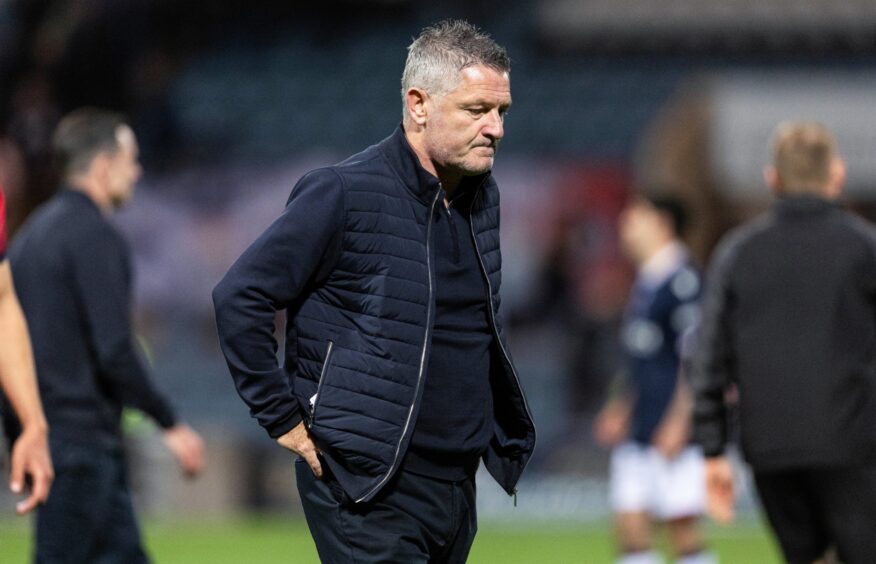
The end of Tony Docherty’s tenure at Dundee began when Kenneth Vargas faced Trevor Carson and put Hearts six goals up at Dens Park.
The entire season hinged on two fateful February defeats, one 6-0 and another in five brutal days.
An impressive January appeared to have put Dundee’s shaky first half of the season behind them, and better days were ahead.
However, the recovery process for this young Dark Blues team was lengthy. Almost too long, as safety from relegation was only guaranteed on the final day of the season.
Dundee’s 2024/25 season promised much but ultimately brought more pain than pleasure to the club’s devoted fans.
Early promise—but warning signs of things to come.
Dundee entered 2024/25 riding a wave of optimism.
The previous season finished in the top six, and the pre-season included victories over Europa Conference League-bound Banik Ostrava and a draw at Lech Poznan.
The Dark Blues dominated their Premier Sports Cup group stage, scoring 18 goals in four matches to set a new record.
Docherty had been stung by his defeat at the same stage a year ago by a single goal. He was not going to let that happen again in his second season.
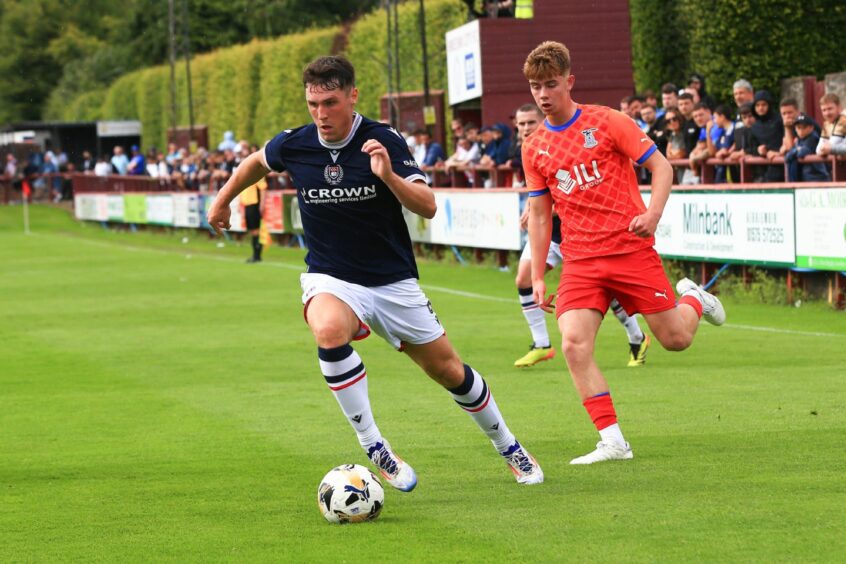
It was a very promising start, but there were signs of what was to come later on.
Despite massively outclassing lower league opponents, they were vulnerable at the back.
Annan Athletic, who would be relegated to League Two at the end of the season, caused havoc for the Premiership Dee at their temporary Brechin home.
Annan scored once but should have had more. A familiar story that would play out repeatedly throughout the season.
Luke McCowan
Dundee had a diamond in their midfield, a leader in the locker room and a player who made things happen on the pitch.
Luke McCowan left on deadline day, after eight appearances and 16 goals. Yes, sixteen.
Only Simon Murray, Lyall Cameron, and Scott Tiffoney completed the entire season with more
.
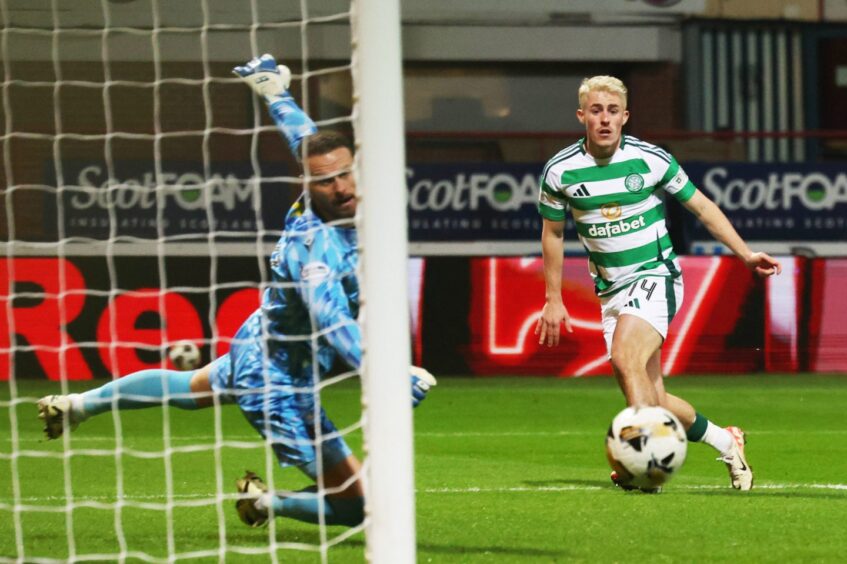
McCowan’s departure was seismic. But it was expected.
Celtic were interested. They would make a bid, Dundee would accept it, and McCowan would return to his boyhood club.
However, as the summer progressed, the deadline approached. McCowan and manager Docherty are constantly having to deflect questions about the midfielder’s future.
Then Hibernian made a bid. Rejected. And another. Rejected. Hibs were not going away.
But McCowan was not interested. He knew the Celtic move was coming.
It eventually happened, albeit late on the deadline. McCowan made an excellent decision.
Dundee also made good money, with £1 million or more in the bank, but the timing was terrible.
There was no time to spend the money to replace him. Docherty had a replacement lined up in the form of Scott Fraser, who was determined to return to the road for family reasons.
However, Dundee were unable to pay a transfer fee for Fraser because McCowan had not yet been sold.
Instead, Fraser had to negotiate the termination of his contract with Charlton Athletic.
Now a free agent, Fraser received some interesting offers, including the opportunity to play abroad.
Three weeks after leaving Charlton, he signed a one-year deal with Dundee.
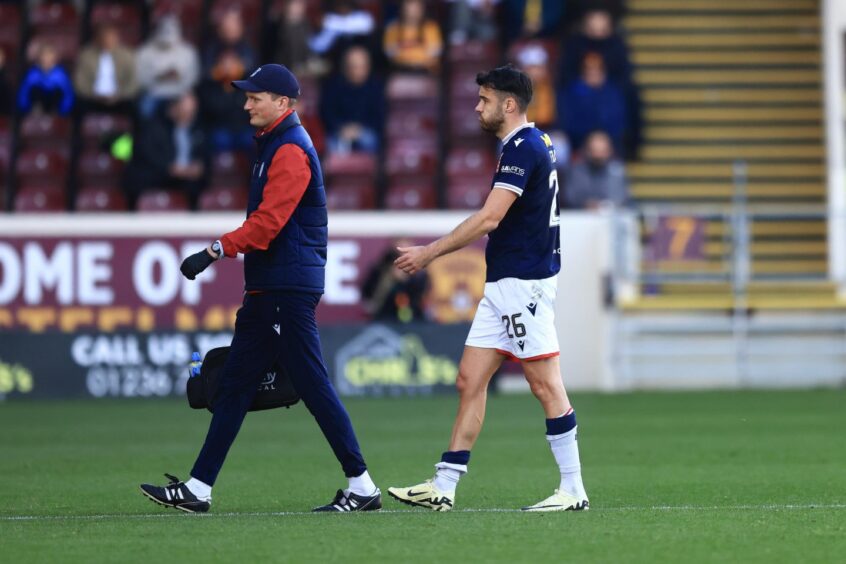
There was a lot to catch up on when it came to fitness. Unfortunately, injury struck during his first start for the club.
It could be his only start for the club after the injury sidelined him for six months. Fraser would make only two more substitute appearances before the season ended.
McCowan, the star, was gone, and his replacement was unable to play. Dundee’s midfield would be a problem throughout the season.
Fraser was a major loss, but not the most significant one.
Joe Shaughnessy had been a colossus in his first season with the club, leading them to a top-six finish.
Again, Shaughnessy’s absence for more than half the season was expected. At this point in his career, the big defender was unlikely to rush back.
Clark Robertson was brought in to make up for the lack of defensive experience, but he, too, suffered from injuries.
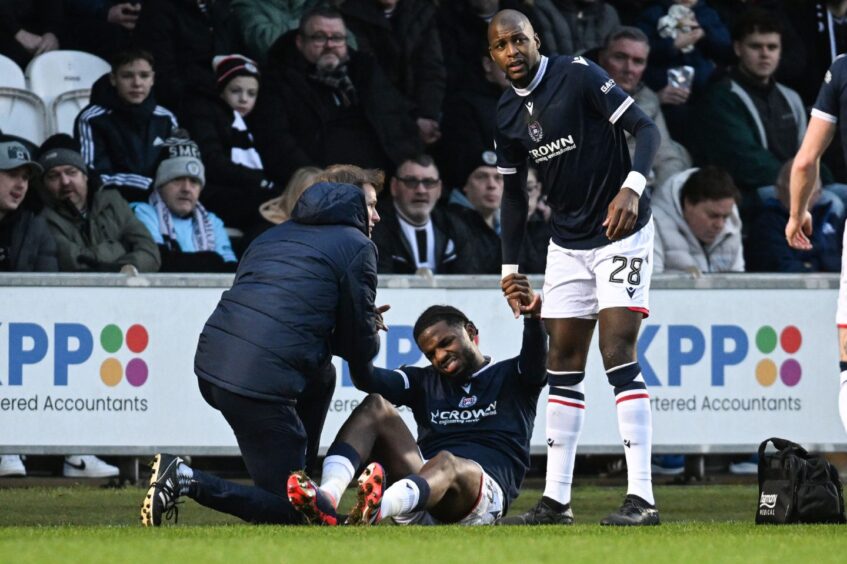
Indeed, his second absence occurred during a full-blown injury crisis.
When Jordan McGhee and Billy Koumetio were injured at the same time at St Mirren, Dundee found themselves with FIVE injured centre-backs.
However, the makeshift back three of Ryan Astley, emergency cover signing Sean Kelly, and young full-back Ethan Ingram rose to the occasion in Paisley, and Dundee won 2-1.
The squad was plagued by injuries throughout the season, but there were also some self-inflicted issues.
Ziyad Larkeche had a good start to life at the club after joining on loan from QPR, but a bad hamstring injury left the squad without suitable cover at left wing-back for much of the season.
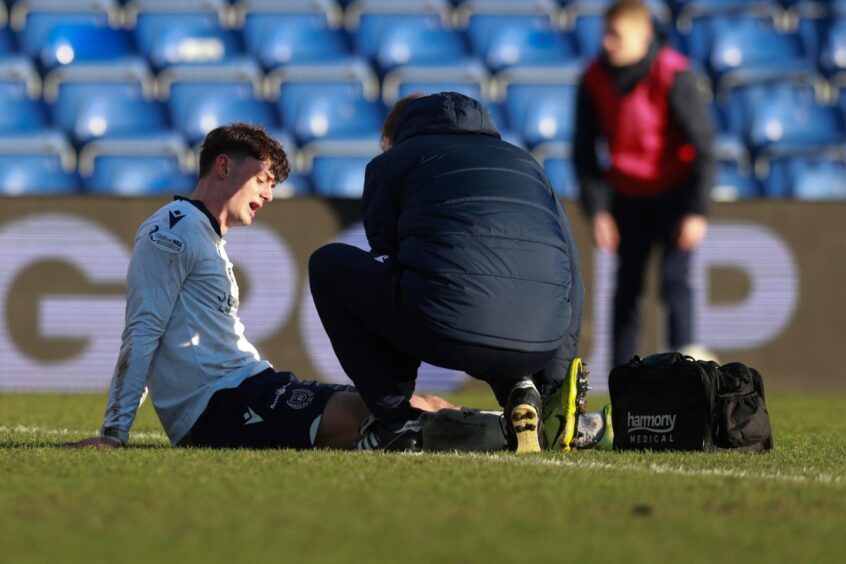
Mo Sylla, a defensive midfielder, had no cover for the first half of the season, and the injury to Seb Palmer-Houlden left Simon Murray as the only fit striker.
What if Murray was injured? It wasn’t worth thinking about.
Fortunately for Dundee, Murray is “made of steel” in his own words, and he continued to put the ball in the back of the net tirelessly.
Due to defensive injuries, Luke Graham was recalled from Falkirk but was rarely used, while Aaron Donnelly’s arrival in January left the squad overloaded with centre-backs once injuries subsided.
Signings
Overall, Dundee’s recruitment was less successful than anticipated.
There was a lot of potential signed, but only enough for the time being to stay in the Premier League.
Simon Murray was a big hit. A three-year contract and six-figure fee for a 32-year-old felt risky, but it paid off handsomely.

Simon Murray celebrates after sealing victory at Dundee United. Image: Ross Parker/SNS
With 22 goals in all competitions, including 16 in the Premiership, he is the highest scoring Scotsman in the division. He has received two Player of the Year nominations and has caught the attention of the national team manager.
Not a bad return on investment.
Among the other captures, Larkeche was successful, Seun Adewumi displayed flashes of brilliance, and Palmer-Houlden performed admirably.
The rest had good moments, some very good, but also some very bad ones.
Jon McCracken had a couple of gaffes, but he also earned a Scotland call-up. He was then promptly dropped and was unable to unseat the more experienced Trevor Carson.
McCracken was frustrated by a lack of action despite the possibility of a repeat call-up. That’s something to keep an eye on this summer.

Clark Robertson defended well for the most part but had some gaffes of his own, while Koumetio, Ingram, Imari Samuels, and Donnelly are all future prospects.
This is where Docherty’s ultimate demise originated. The Murray investment paid off, but a similar-sized investment in Donnelly has not, and an even larger one – estimated to be around £300,000 – for Koumetio was derailed by a serious injury.
Dundee spent a lot of money – much more than in previous seasons – but they assembled an unbalanced squad that could only scrape by.
Hearts humiliation
Dundee’s first half-season had its ups and downs. Highs included back-to-back 4-1 home wins over Hibs and Motherwell, while lows included losing a two-goal lead with four minutes remaining to Kilmarnock.
However, they were in poor health when they met Hearts on February 1. Things were looking up.
They were coming off an injury crisis, felt cheated to only draw with Rangers and Celtic despite leading in both games, and kept a rare clean sheet to defeat Dundee United in the cup.
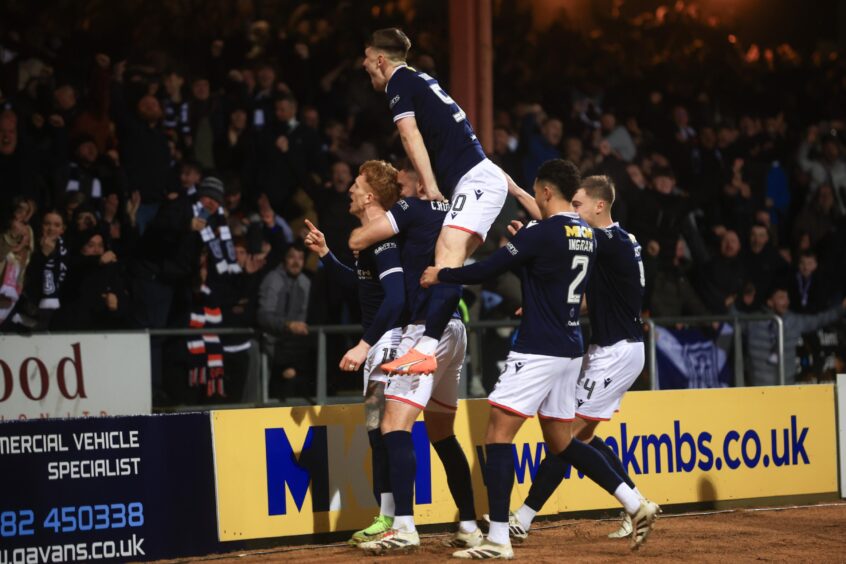
Dundee players celebrate with fans on Scottish Cup derby night. Image: David Young/Shutterstock
The Dees were unbeaten in four games and ranked seventh, two points behind the top six teams.
Hearts trailed by three points and ranked eleventh. Dundee were confident; this was where their push for a second consecutive top-six finish would begin.
The young players had settled in; it was time to put their inconsistencies behind them and move forward.
Instead, one dreadful collapse triggered a crisis of confidence. One that Tony Docherty’s tenure as manager of the club could not overcome.
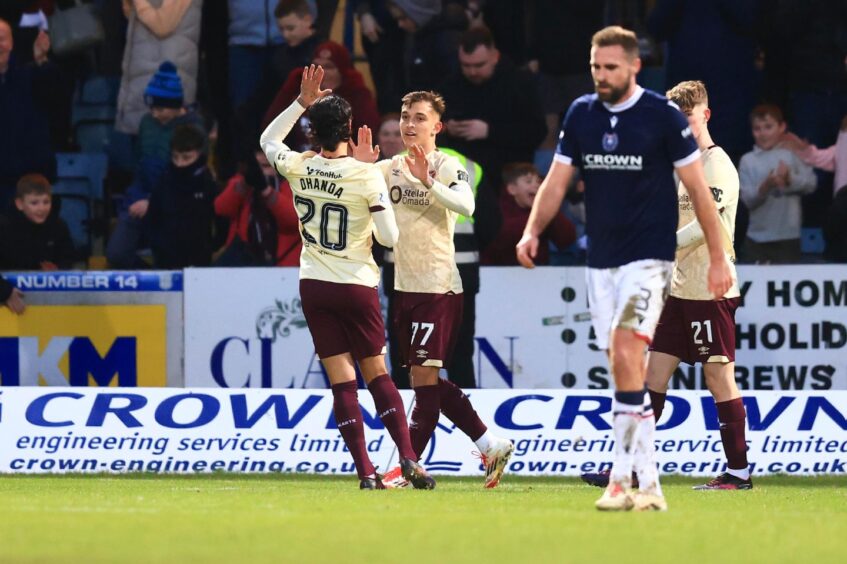
Hearts celebrate as Dundee capitulate. Image: David Young/Shutterstock
It was a bad day, but this Dundee team had previous bad days and recovered. However, a trip to Celtic was not an ideal next fixture.
Especially a Celtic team that had their nose bloodied at Dens just a few weeks prior. The Dark Blues had enraged Celtic, and when Celtic is angry, the opposition is in trouble.
Back-to-back 6-0 defeats shattered the team’s confidence. They’d only get one point out of 18 available, putting them in a relegation battle.
Battle to Beat the Drop
A memorable victory over Dundee United lifted spirits, with an exhilarating first half demonstrating this team’s attacking potential.
When they were on it, this team was incredible to watch. But too often, the brilliance faded, the starting players unable to maintain the intensity, and the squad’s depth was insufficient to see the game through.
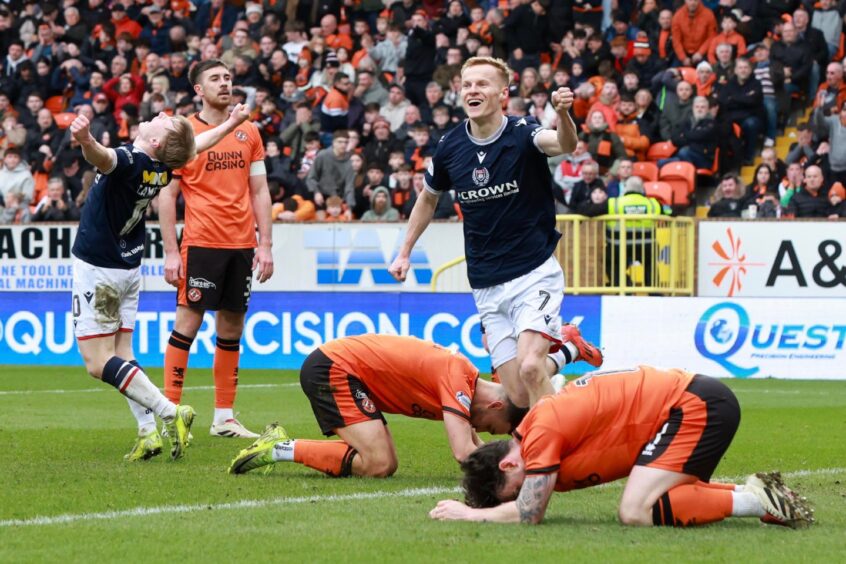
Too often, leads were lost – 28 points from winning positions is a damning statistic, with goals conceded in the final 15 minutes being this team’s Achilles heel.
After the United victory, they conceded four goals to Rangers and blew a 3-1 lead at Dens with more late goals. Then another good win over St Mirren, followed by four more goals conceded at Hibs.
Consistently inconsistent.
Dundee’s league position, on the other hand, remained consistent – they had been 11th for over two months prior to the split.
Ross County’s dismal performance provided hope. This, however, was a Ross County side that had already taken nine points from the Dark Blues.
A much-needed win at Hearts put dark blue noses ahead, but another lead was squandered against Motherwell, followed by a poor performance at Kilmarnock, leaving things hanging going into the final two games.
It appeared that they had finally done enough to secure Premiership status for next season, with a lead against Ross County (finally), until referee Nick Walsh pointed to the spot deep into injury time.
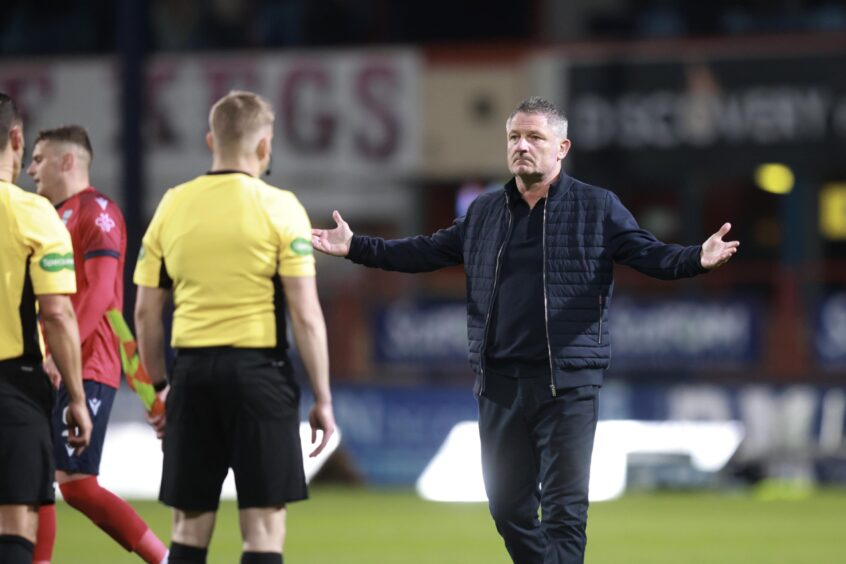
Tony Docherty signals his anger to referee Nick Walsh after a controversial penalty decision. Image: David Young/Action Plus/Shutterstock
It was the harshest penalty decision. The type of decision that referees have been instructed not to make this season.
County scored and made it to the final day.
In the press room, it was announced that Docherty would not be attending post-match interviews; instead, assistant manager Stuart Taylor would take over.
Docherty had repeatedly criticised refereeing decisions, particularly VAR. He’d been asked to tone it down by club officials at various points throughout the season.
This was precisely why. This decision required blasting, but he had already used all of his blasts.
Taylor did an excellent job as a politician in front of the cameras, and in the end, Dundee’s anger propelled them to the victory at St Johnstone.
Lyall Cameron comes to the forefront with his final act before joining Rangers, signing off in signature style.
That was not the end of the drama, however.
Tony Docherty dismissed
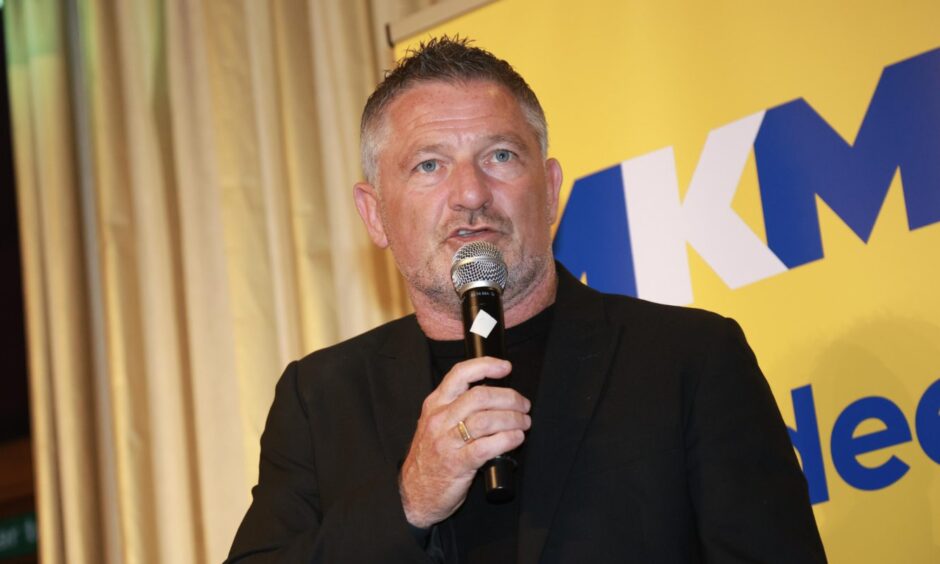
Docherty was told before he even boarded the team bus that he and his staff needed to be at the training ground by 9 a.m. the next day.
After a brief 9am meeting, Docherty’s tenure as manager ended.
It was harsh. Avoiding relegation was a source of pride in Dundee’s recent history.
However, managing director John Nelms did not celebrate. After making significant investments in the team, they would come within two bad outcomes of the financial black hole that is Championship football.
That was not acceptable in the Dundee Football Club’s new world.
The axe fell. Docherty’s early promise was fulfilled in a matter of minutes at Gardyne Campus.
And so the search for a new Dundee manager begins again.
Read more on sportupdates.co.uk
Leave a Reply