
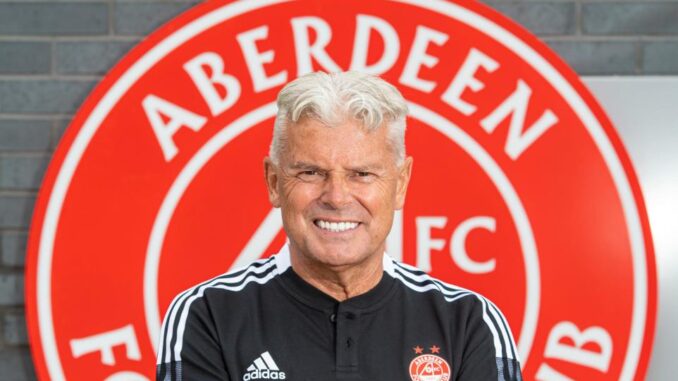
Why Aberdeen’s loss-making business model can give them edge on rivals.

Speculation about whether Hearts or Rangers might challenge Celtic for major Scottish football honours, particularly the William Hill Premiership, next season and beyond has been widespread in recent weeks, thanks to off-field changes at the Tynecastle and Ibrox teams.
Brighton owner and professional gambler Tony Bloom purchasing a 29 percent interest in the Gorgie outfit for £9.86 million, and a partnership including 49ers Enterprises and American businessman Andrew Cavenagh completing their £75 million buyout of the Govan giants, have sent shockwaves through the game in this nation.
Whether Aberdeen can build on their historic Scottish Gas Scottish Cup victory over their Parkhead rivals at Hampden in May and add more silverware to their trophy cupboard has received little attention, despite the arrival of no less than four new players at Pittodrie in the last few weeks.
The revelation this week that chairman and majority shareholder Dave Cormack and director Tom Crotty have agreed to invest £8 million in new capital has scarcely given people in boardrooms around the country heart palpitations.
That is, even on these shores, a minuscule sum in the modern game. Furthermore, the vast majority of it will be spent developing an indoor pitch at their training facility. The hour-long Red TV interview with Aberdeen-born, United States-based software entrepreneur Cormack, which was aired on YouTube on Wednesday, was fascinating and suggested that the north-east outfit may have more good times ahead of them in the future campaigns. Even if he did declare, “We’re making a decision to lose £3 million to £4 million operationally per year as a club.”
Much has been said about how data analytics will drive Hearts’ recruitment efforts now that Bloom, who has had great success with Brighton in England and Royal Union Saint-Gilloise in Belgium using such approaches, is a key player behind the scenes. The Jambos are hopeful that Jamestown Analytics, the company owned by the mathematics whiz known as The Lizard on the poker circuit, will be able to unearth a few outstanding players in the transfer market for reasonable fees, allowing them to compete with larger and wealthier rivals.
Rangers chose this path in 2023, when they restructured its scouting department, hired a slew of new staff in important positions, and transitioned to a data-driven system that relied more heavily on video analysis than before.
However, Cormack, who claimed that he expects Swedish manager Jimmy Thelin to bring in approximately eight new recruits before the summer window closes on August 31, pointed out that this is exactly the strategy Aberdeen has been adopting for some years.
It is a strategy that has allowed them to profit from their incomings and outgoings while spending far more money on transfer fees and player wages than they would be able to if they relied solely on gate receipts, sponsorship money, and television revenue because they are confident they will recoup their investment and more later on.
(Image: Craig Foy, SNS Group) They made more than £8 million from the departures of Bojan Miovski (Giron), Duk (Leganes), and Connor Barron (Rangers) last season.
The previous year, they received more than £3 million when Ylber Ramadani (Lecce) and Ross McCrorie (Bristol City) were sold. Calvin Ramsay (Liverpool) and Lewis Ferguson (Bologna) earned more than £7 million in sales three years ago. Scott McKenna (Nottingham Forest) and Sam Cosgrove (Birmingham City) both left for more than £5 million a few seasons prior.
“We have got a squad planning and recruitment team in place now which I think will stand us in good stead,” Cormack told reporters. “Everyone is talking about the analytics and algorithms that everyone is utilising. But we’ve been utilising them for five or six years now. Miovski, Ramadani, and several other players have gotten through it. We’ve tapped into that.
Aberdeen’s chairman expects winger Topi Keskinen, who played prominently for Finland in the European Under-21 Championship finals in Slovakia this summer and scored goals in draws with the Netherlands and Denmark, will be the next recruit to generate a significant return on investment.
“There is a reason we have paid £1m for Topi,” he informed me. “Listen, in the last five years, we’ve sold slightly over £20 million worth of players. That is a substantial revenue for us. The trick is to strike a balance between that and being competitive. “Our scouting must be good in order to identify and value players.
But people want to come to Aberdeen now because they know they will have the possibility to advance to a bigger club.” Cormack has faced severe criticism from supporters and media pundits, including this correspondent, over his six years as chairman, despite the large sums of money he has personally invested in his boyhood idols.
Before Thelin was hired last summer, he had a dismal track record of choosing managers. Because to his poor decisions, the team’s results both at home and abroad frequently fell short of expectations.
But he is hopeful that Graeme Shinnie and his teammates can improve even more despite having to deal with European group stage football again next season – something they struggled with when they first entered the Conference League two years ago – and playing against revitalised Hearts and Rangers teams.
“It’s always good to have competition,” he said. “It’s never a worry, it’s a challenge. This multi-club environment is an approach other clubs (Hearts, Hibernian and Rangers) are taking is new. But I think it is important we focus on what Aberdeen are doing. You will never get all of your recruitment right. The industry average is 50 per cent. We need to be at 70 to 80 per cent.
“Listen, if I fall under a bus tomorrow I don’t want to leave the club in a poor financial position. It has to stand on its own two feet. But we’re making a decision to lose £3m or £4m operationally a year as a club. What we have got today is a player trading environment which is allowing us to punch above our weight in terms of recruiting and player wages.”
Read more on sportupdates.co.uk
Leave a Reply