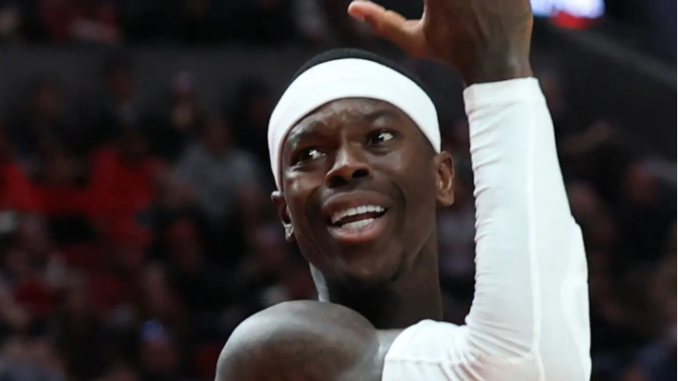
The Pistons have backed themselves into a difficult spot, and the recent expiration of Dennis Schröder’s Traded Player Exception from last summer really drives that reality home. When Schröder left for a larger deal with the Kings, Detroit received an $8.7 million TPE that never ended up producing anything meaningful. That exception officially lapsed on July 7th with virtually nothing to show for it.
Detroit squandered a valuable tool by playing it too safe.
TPEs are inherently tricky to leverage, given that they cannot be combined with larger salaries to bring in a higher-priced contract. The Pistons were restricted to acquiring players earning $8.7 million or less, which naturally rules out most appealing trade candidates across the league. Even so, Detroit’s handling of the TPE was still notably underwhelming the only return they generated was a pick swap in this year’s draft, moving from No. 28 to No. 21, in exchange for taking on Dario Šarić’s salary.

That swap sounds decent on paper, but its value was undercut when they dealt away three second-round picks or, depending on your perspective, effectively Isaiah Stewart just to climb four more spots to No. 17. Whatever shrewdness the Pistons gained by moving up seven slots with the TPE, they immediately gave back by trading Stewart solely to edge up a handful of additional positions.
Conversely, there were plenty of attainable trade targets who could have strengthened the Pistons last season or even right now within the TPE’s parameters. Notable possibilities include Quentin Grimes, Ayo Dosunmu, or José Alvarado. Any of those three would have provided additional ball-handling and shot creation alongside Cade Cunningham in the backcourt, which might have proven pivotal during the playoffs.
Detroit needs to shift gears and start operating with more urgency.
Around the league, the Pistons aren’t being viewed as legitimate contenders largely because they’ve remained so cautious, even after a historic 60-win campaign. Rather than being willing to part with assets to secure substantial upgrades, they keep prioritizing marginal moves. Those types of transactions are useful for constructing a foundation, but making the final leap toward championship contention usually demands sacrificing some future capital for current star-level talent.

If Detroit had wanted to maximize their TPE to land one of the players mentioned earlier, they likely would have needed to include additional assets in the deal. But for a team that was clearly on a blistering win pace by the trade deadline, that kind of investment should have been worthwhile. Surrendering a future second-round pick or two to raise your playoff ceiling during what could be a deep run is entirely reasonable when legitimate title aspirations are on the line.
If the Pistons are serious about chasing a championship, they have to be ready to utilize every asset at their disposal—even if that occasionally means overpaying in their pursuit of improvement.
Leave a Reply